Affiliate disclosure: This article contains affiliate links to eBay. As a participant in the eBay Partner Network, GrailStitch may earn a commission if you click a link and make a purchase, at no extra cost to you.
1970s Vintage Suede and Shearling Coats: How to Spot Real Sheepskin and Avoid Dry Rot
By GrailStitch Editorial, published , 4 min read
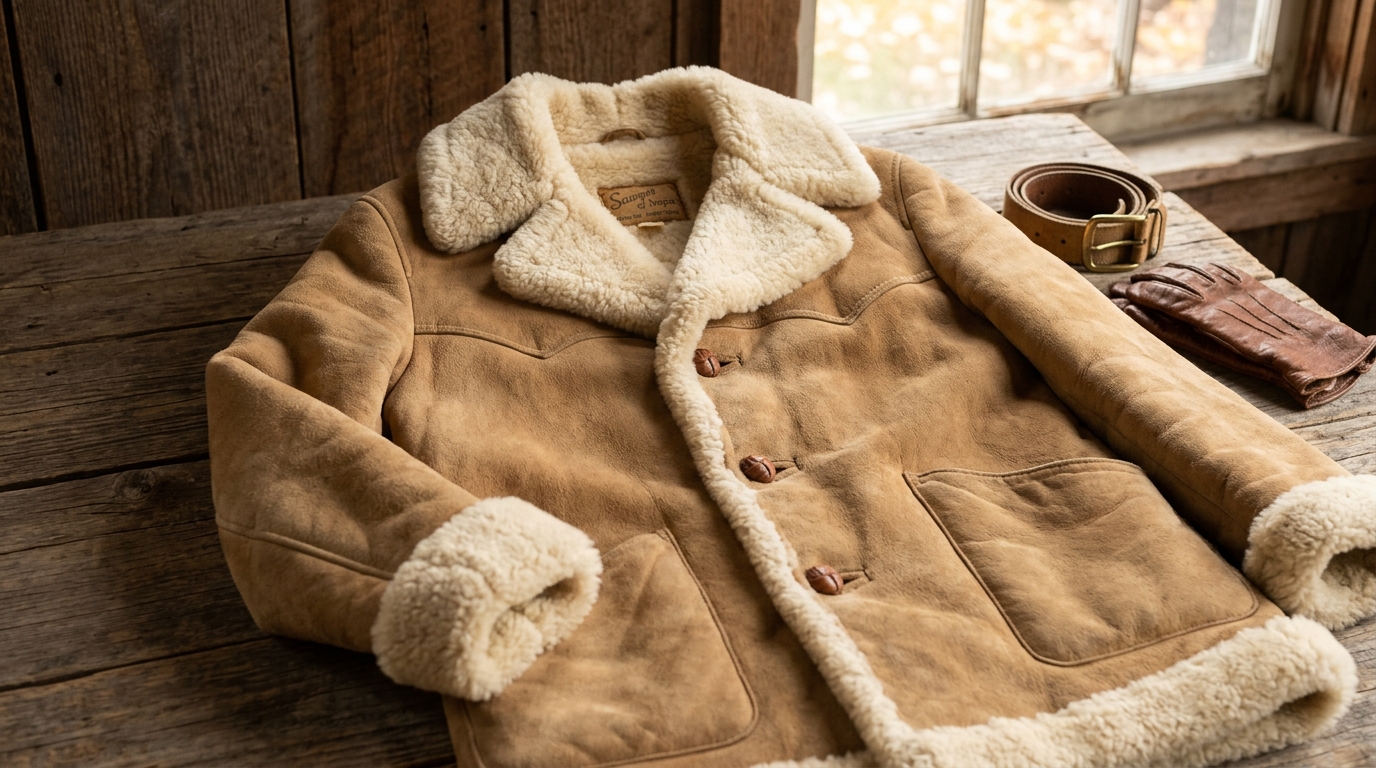
Nothing captures 1970s heritage outerwear quite like a heavyweight suede and shearling coat. From Western ranch coats and B-3 flight jackets to tailored European double-breasted coats, authentic 1970s sheepskin outerwear remains in high demand every autumn and winter. However, buying 50-year-old leather and wool online carries real risks: synthetic acrylic linings often masquerade as genuine shearling, and improperly stored hides can suffer from irreversible leather dry rot.
Quick Reference Matrix: 1970s Suede & Shearling Outerwear Tiers
Use this comparison guide to separate true single-pelt sheepskin coats from lower-value synthetic or split-suede garments:
| Coat Construction Type | Era Hallmarks & Brands | Lining & Hide Structure | Weight & Feel | Typical eBay Value (Supple Condition) |
|---|---|---|---|---|
| True Double-Face Shearling | Schott NYC, Sawyer of Napa, Aero, Golden Bear (1970s) | Single sheepskin pelt (suede outside, wool fleece grown directly on inside) | Very heavy (5–8 lbs); warm, breathable | $280 – $750+ |
| Genuine Suede + Separate Wool Lining | Pioneer Wear, Sears Oakbrook, Levi’s (1970s) | Split cowhide or pigskin suede shell with stitched wool-blend pile lining | Medium-heavy (3–5 lbs); structured drape | $140 – $320 |
| Suede Trucker / Western Fringed | Levi’s Big E/Small e, Jo-Kay, Scully (1960s–70s) | Unlined or satin-lined roughout/suede with snap or horn buttons | Medium weight; supple nap | $180 – $480+ |
| Faux Suede / Acrylic Pile ("Sherpa") | 1970s department store budget lines | Polyester microfiber shell with synthetic acrylic fleece backing | Lightweight; static-prone; shiny fibers | $45 – $110 |
1. Real Shearling vs. Synthetic "Sherpa" Pile
The single biggest pricing mistake buyers make is confusing true shearling with faux shearling (acrylic Sherpa):
- Inspect the Backing (The Parting Test): Genuine shearling is tanned from a single sheepskin hide with the wool still attached to the skin. If you part the wool fibers down to the base, you will see smooth, natural leather skin—never a woven fabric mesh or knitted polyester grid.
- Burn & Touch Characteristics: Real wool fleece feels dense, slightly matte, and naturally lanolin-rich without plastic shine. Synthetic acrylic pile from the 1970s often looks overly uniform, feels coarse or "crunchy" at the tips, and matting tends to clump into shiny synthetic knots.
- No Separate Lining Seam: On a true double-face shearling coat, the interior wool is the reverse side of the exterior suede, so the coat does not have a loose hanging lining sewn separately at the hem.
2. How to Spot Leather Dry Rot Before You Buy
Fifty-year-old hides stored in dry attics or damp basements lose their natural oils over time, leading to dry rot—a structural breakdown where leather tears like damp cardboard:
- Check High-Stress Seam Lines: Ask the seller for macro photos of the underarm seams, shoulder tops, and buttonholes. Dry-rotted suede shows tiny hairline cracks, flaking surface dust, or dark brittle edges where thread pulls through the hide.
- The Pinch & Flex Test: Healthy 1970s suede bends softly and recovers without creasing sharply. If the seller mentions the leather feels "stiff," "crispy," or "fragile," avoid the coat—no amount of leather conditioner can restore dried-out collagen fibers once they begin tearing.
- Hardware & Zipper Clues: Authentic 1970s American shearling and suede coats typically feature heavy brass Talon, Scovill, or YKK zippers, or woven leather football buttons (braided leather knot buttons).
3. Top 1970s Heritage Labels Worth Searching For
While unbranded 1970s coats can still offer great quality, several heritage makers consistently command higher collector value and superior hide tanning:
- Sawyer of Napa (California): Widely regarded as the gold standard of 1970s American shearling coats, featuring butter-soft Napa sheepskin and meticulous whipstitched seams.
- Schott NYC & Golden Bear: Iconic American outerwear makers whose 1970s suede truckers, ranch coats, and B-3 shearling bomber jackets feature heavy-duty hardware and accurate sizing.
- Pioneer Wear & Jo-Kay (New Mexico): Classic Southwestern makers known for 1970s roughout suede coats, horn buttons, and authentic Western yoke stitching.
4. Vintage 1970s Sizing and Shoulder Fit
1970s outerwear was tailored noticeably trimmer through the chest and shoulders than 1990s coats:
- Narrower Armholes: Expect higher, closer-fitting armholes designed to layer over a thin knit sweater or Western shirt rather than a thick modern hoodie.
- Measure Across the Back Shoulders: Because shearling wool adds 0.5 to 1 inch of interior thickness, a tagged Size 40 (Medium) often fits closer to a modern Small/Slim Medium. Always compare flat shoulder-to-shoulder and pit-to-pit measurements against a coat you already own.
Quick 1970s Suede & Shearling Buying Checklist
- Verify Single-Pelt Construction: Part the wool to confirm natural leather skin underneath rather than woven synthetic backing.
- Check High-Tension Areas: Inspect underarms, collar folds, and buttonholes for cracking or dry rot.
- Confirm Period Hardware: Look for brass Talon/Scovill zippers or braided leather buttons.
- Account for Wool Thickness: Size up if you plan to layer heavy knitwear beneath a shearling coat.
- Budget for Specialist Cleaning: Vintage suede and shearling must be cleaned by a leather specialist—never machine-washed or standard dry-cleaned.
Disclosure reminder: Links marked “Check Current Prices on eBay” are affiliate links. Prices and availability change, so confirm details on the listing.